Masthead header

Andrew Peterson is one of the best storytellers I’ve ever heard. The way he takes basic ideas and lessons and turns them into amazingly beautiful adventures is incredible. You know a good song by the story it tells. You know a good story by the different journey it takes you on every time you hear it.Image


You’ll Find Your Way is such a song. Here’s the lyric that inspired me this morning:


Go back, go back to the ancient paths
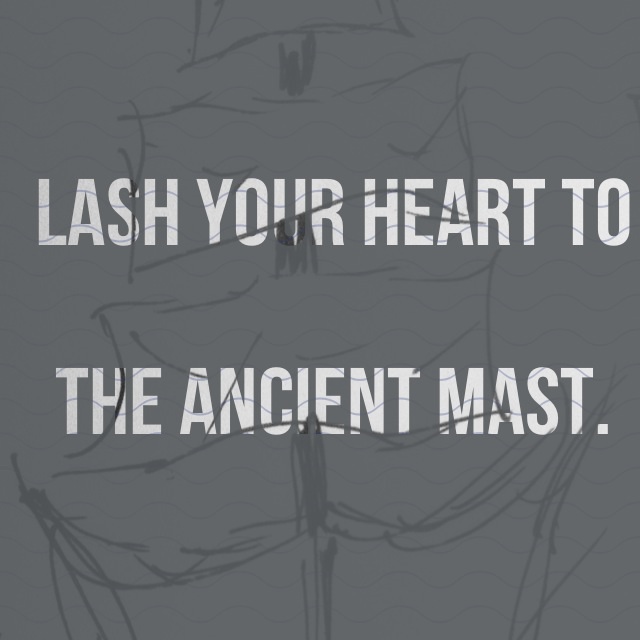
Lash your heart to the ancient mast
And hold on, boy, whatever you do
To the hope that’s taken hold of you
And you’ll find your way
You’ll find your way.

Happy Monday πŸ™‚

I used to be the guy who would wait around for inspiration before I would make something. Sometimes I still am that guy. But I know that since I get paid to be creative I have to be on top of my game and show up ready to kill it. So I practice creativity as opposed to looking for inspiration, I get inspired through intentional practices throughout my week.

When you’re looking for inspiration you often look in the wrong places. I know I used to look at other peoples work and photo blogs in hopes that I’d feel inspired but instead it just confirmed that I sucked and that they were awesome. (Which wasn’t true but that’s what this search for inspiration will do for you.) While this option may feel productive, the result often for me is lack of creativity and frustration. All that work and inspiration never really came to fruition.

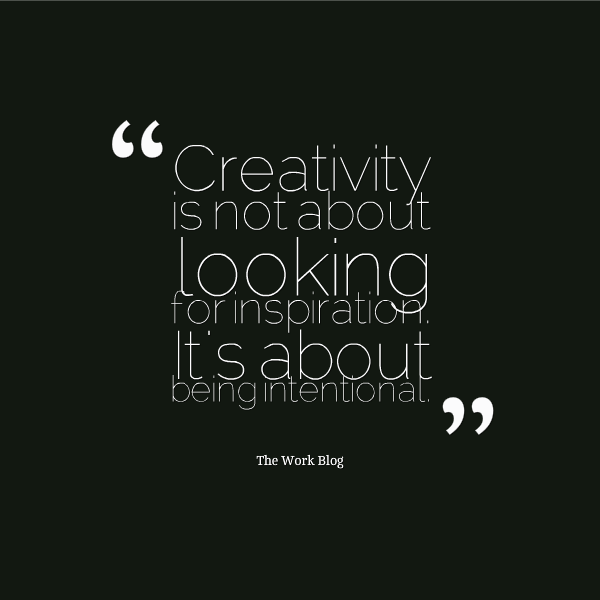
When you’re practicing creativity, one of the things I do is give my brain the stuff it needs in order to create stuff, form opinions and original ideas. This works because my brain needs to connect and organize information before I can make something new. It collects my experiences, thoughts, and what I’m learning to make something that is uniquely mine. Not only do I miss the comparison problem here but you are intentionally growing your creativity instead of passively hoping for inspiration. Creativity is not about looking for inspiration. It’s about being intentional.

Creativity is Intentional

In Todd Henry’s book The Accidental Creative: How To Be Brilliant At A Moments Notice, He talks about this idea and he accurately describes it as Stimuli. Stimuli is what your brain absorbs throughout your day. Examples of this can be anything from music, books and videos to concerts, hiking or seminars. Think for a second about what your information diet looks like on a regular basis. Does you start out with Facebook and Email? or a book or podcast? Does it include something new once a week? Something different from your daily routine?

Todd says that Stimuli is what we take in and what we take in is what is going to come out.

Make sure it’s good.

Ideas for good Stimuli:
Start your day with a book.
schedule in some time this week and listen to a podcast. (Like: EntreLeadership, The Accidental Creative, or another subject your interested in)
Watch a presentation on something you’ve never heard about (Ted Talks are easy for this)

Once you’ve used these up, Put 5-7 more in you “Queue” so you don’t have to go looking for new stuff each time. Every time I see something I might like to read or watch pop up in Facebook or what ever, I throw it into an app called Pocket so that I have easy access to it later. There are several like this but this one if my favorite.

Happy Hump Day, folks.

  • Lee-Ann - Slight irony: you inspired me with this post. Thanks for being a source of Stimuli!ReplyCancel

  • verdant1 - You make an excellent point. It’s very easy (and very tempting) to waft around waiting to ‘be inspired’ (whatever thta means), when in reality digging in and DOING something is when we actually get really creative. (Looming deadlines can help, too…)ReplyCancel

A few months ago, I was reading John Maxwell’s book Winning With People. In it he tells a story.

John was in a hotel in New Zealand for a conference. He found himself looking for the vending machines and was having trouble finding one. In his search, he wandered into the staff lounge hoping that he might find someone to point him in the right direction. There were no workers in the room nor any vending machines but as he turned to head out, he saw something that he’ll never forget. On the back of the door he had just entered was a mirror. And on that mirror was a sign that read, “Take a good look at yourself. This is what the customer sees.”

I have to believe this was put there because the manager knows that the guest’s experience involves not only the quality and cleanliness of the rooms and hotel, but also the attitudes and appearance of the staff. So he challenged them to take on that responsibility.

This could also be applied to our day to day living. When I wake up and head out in to the world to interact with people, I want them to see the best version of me. That means that I check my attitude and my ego at the door. My best work and the best version of myself is what I want the world to see. This can’t happen if my attitude is crap.

When I say “The Best Verison Of Myself” What I mean is being the person I am but intentionally applying qualities I want to possess. It’s about growth. It’s about being the man, leader, husband, friend, neighbor that I know I can be. It’s not about always being “on.” It’s about striving to always be your best. Because that’s what you deserve.

Show Us The Best Version of You.
Image

Challenge for myself and for you this week:
Be intentional about your attitude. Because it’s what people notice first.


1) When you’re looking in the mirror this week, before you walk out the door think to yourself:
“This is what the world sees.”


2) I have a notification on my phone that goes off everyday at 2 pm. It says simply, “Check your attitude.” I see it. I take a deep breath and move on. It’s always a timely reminder. Give it a shot and see what happens.

Continuing my read of The Start-Up of You, I found another bit of entrepreneurial knowledge bombs to share with you guys! Before I do, I must say that this is must read. Some people just like to skim books like this, and usually I pick one book to skim through and one to dig in to every month. I’m digging in to this one. I’ve found several quotable nuggets throughout that make it worth a true read πŸ™‚

This next chapter is about Developing a Competitive Advantage. Basically, as individuals and entrepreneurs, we are selling ourselves. Our “Brainpower, Skills, and Energy. And we are doing so in the face of massive competition.” So how do we differentiate in a market that is full of people who have so many awesome things to offer? By combining our unique assets, our individual aspirations and values, AND The Market Realities.

Assets

An asset is something we have right now. It’s something that I can point to and say “I have this going for me right now.” There are two kinds of assets:

Soft assets Intangible (Knowledge, Connections, Skills)

Hard assets- Tangible (Stocks, Cash, Physical objects)

These are things that are not fixed. They should change and grow as we do.

“Your asset mix is not fixed. You can strengthen it by investing in yourself- That’s what this book is about.”


Aspirations and Values

These combined with our assets and strengths will start to give direction. Just a few awesome quotes about this:

“The person passionate about what he or she is doing will outlast the guy motivated solely by making money.”

This connects back to the whole “Start With Why” idea as well (Which we love and practice). To me it goes a little deeper than passion. It’s what you believe. You can connect people with similar passions but connecting with people on a common belief is as deep as it gets. Clarifying your “Why” or Purpose will help you hire people who believe what you believe and attract client who do the same.

“Your identity isn’t found. It emerges.”

Who you is who your are. You can’t “find” it. You know exactly where it is right now. You have to let emerge through action and experience.

Most important to remember, these aspirations and values will evolve over time as we learn and grow. Not change. Evolve.

The Market Realities

The market is where it all has to come to life. It’s where your going to release your idea and it’s ultimately where you’re going to connect with the audience that believes in what you’re doing.

Loved this description of “Market”:

“The ‘Market’ is not an abstract thing. It consists of people who make decisions that affect you and whose needs you must serve.”

Love that. I feel like we spend a lot of time talking about “The Market this. The Market that…” It really kind of rocked my world to spin it like this. To think that “The Market” is not just out there floating around waiting to be acted upon or won. They are people. Just a cool thought.

Other points:

“All advantages are local: Pick a hill with less competition.”

“Place yourself in a market niche where your existing assets shine brighter than your competition.”

What can you do that no one else can do? What can you be the best in the world at?

There is an answer to that question. No one else can have your unique experiences, your unique goals and aspirations, AND your specific market situations. You then in turn have to positions yourself into that niche and win. Be brutally honest about these things and just start doing stuff. Your “true self” isn’t going to walk up behind you and kick you in the head as you sit on your couch.

Try lots of things, have lots of experiences. You’ll start to notice things that work and things that don’t. But first, you have to do things.

This week, I’m going to write down my assets, aspirations, and market realities. I feel like this is a good practice from time to time if not just to be honest about where you are and remembering where you want to go. Or deciding another heading altogether. I challenge you to do the same.

Happy October folks!

I started reading the Start-Up of You today by Reid Hoffman (cofounder and chairman of Linkedin) and Ben Casnocha. I’ve had it sitting on my shelf for 6 months now and I finally got around to picking it up. At first, I was honestly wondering if this book was going to give me anything new that I hadn’t already heard from interviews on podcasts with Hoffman and big quotes I’ve heard in talks over the past year. But then they start to dig in to real stuff.

Basically the book is about the fact that we’re all entrepreneurs. Not that we should all be starting companies or anything but that at our core, we all have a heart for entrepreneurship. We can use the skills of entrepreneurs and successful start-ups to develop ourselves and be successful as individuals. Because the world of wake up at the same job every year and “ride the escalator to the top” for the next 50 years doesn’t exist anymore (at least for the majority). The Start-Up of You means that you have to take on responsibility of making your career successful by thinking like an entrepreneur.

Thinking like an Entrepreneur: Building a network, developing a competitive advantage, aggressively seeking break-out opportunities, taking intelligent risks. These are the things Hoffman and Casnocha have offered up to help “Move the jammed escalator” that is the traditional career path.

One thing I really like about this book is that it’s honest. It’s not selling a twelve-step program that guarantees success (or your money back!). It’s not a self help book. It’s a self-teach book. It’s a self-grow book.

They talk briefly in the opening chapter about “Living in Personal Beta.” Which basically means a live-long commitment to personal growth. It means that you’re constantly growing and evolving.

“Get busy livin’, or get busy dyin’. If you’re not growing, You’re contracting. If you’re not moving forward, you’re moving backward.”

^^^^^^THIS^^^^^^^^

I’ll update you guys on what comes next in this book. I think I’ll start doing this more just as kind of a review of the books I read to help with my own retention and to share what I learned.

Live in personal-beta. Good stuff.